Live Casino Camera Technology Explained
Why camera setup matters so much for live casino
Camera technology is one of the most visible parts of live casino's technical infrastructure, since it directly determines what you actually see and how clearly you can follow the action. Beyond simple video quality, camera setup also plays a genuine fairness role, covered in live casino security explained — multiple angles covering the same physical area make outcomes easier to verify and harder to misrepresent. This guide focuses specifically on how the camera side of live casino technology works.
Multi-camera setups, generally
Nearly every live table uses more than one camera simultaneously, each serving a different purpose. A typical setup includes a wide establishing shot showing the full table and dealer, a closer angle focused specifically on the dealing or action area (cards being dealt, chips being placed), and often at least one additional specialty angle depending on the specific game. Production systems — automated, manually operated, or a combination — switch between these angles in real time to show whichever view best captures the current moment in play.
Camera technology on blackjack and card games
Card games generally use a moderate camera setup: a main table-wide shot, a close-up on the dealing area to clearly show card values and player hand positions, and sometimes a dedicated angle on the shoe itself. Because card values need to be read clearly by both players and recognition technology, lighting and camera positioning around the dealing area are particularly carefully calibrated on these tables, since a poorly lit or awkwardly angled shot would hurt both the viewing experience and the accuracy of optical character recognition.
Camera technology on roulette
Roulette tables, particularly Immersive-format variants, tend to use some of the most elaborate camera setups in live casino specifically to capture a wheel and ball clearly through their full range of motion. This commonly includes a dedicated high-frame-rate camera trained directly on the wheel, sometimes paired with slow-motion replay functionality that plays back the ball's final bounce and landing at reduced speed immediately after a spin resolves — a feature that adds genuine visual drama while also giving players a clearer look at exactly how the result occurred.
Camera technology on game shows
Game shows generally receive the most elaborate camera treatment of any live casino category, reflecting their more dynamic, entertainment-focused production style. Multiple angles capture the host, the central wheel or game mechanism, and often additional bonus-round elements simultaneously, with more active camera switching than a typical table game to keep the visual pacing engaging throughout a segment. This heavier production investment is part of what gives game shows their distinctly more "broadcast television" feel compared to the more procedural visual style of traditional table games.
Resolution and video quality
Modern live casino studios typically stream in high definition as a baseline, with many offering even higher resolution options where a player's connection supports it. Video quality is balanced dynamically against connection stability — as covered in how live casinos work, platforms generally prioritize a smooth, uninterrupted stream over maximum resolution when bandwidth is constrained, since a stable lower-resolution stream is more useful for actually following a live game than a higher-resolution stream that buffers or drops frequently.
Lighting as part of the camera system
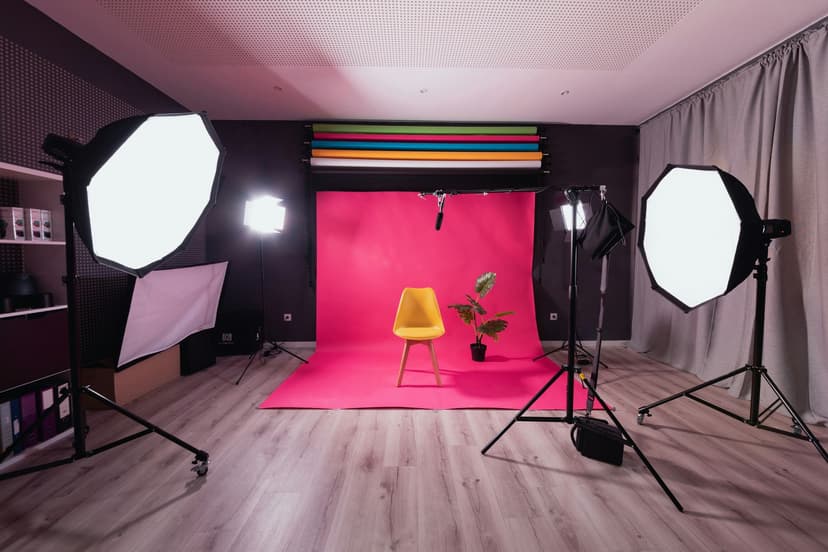
Lighting design works closely alongside camera placement, since even the best camera can't compensate for poor lighting on the table surface, cards, or wheel. Studios use carefully calibrated lighting rigs — often adjustable per table — specifically to eliminate glare, ensure consistent color accuracy (important for reading card suits and roulette wheel colors correctly), and maintain even illumination across the entire playing surface, avoiding shadows that could obscure recognition technology's ability to read the table accurately.
How camera angles support recognition technology
Camera positioning isn't purely about what looks good to a viewer — angles are also chosen to give optical character recognition systems a clean, consistent, and unobstructed view of whatever they need to read (cards, chip placements, wheel position). This dual purpose — serving both the human viewer and the automated recognition system — is part of why live casino camera setups are engineered more deliberately than a typical broadcast production might need to be, since the camera feed isn't just for viewing, it's also functional infrastructure for how the game actually operates.
Camera technology's role in the player experience
Beyond fairness and functionality, good camera work genuinely shapes how enjoyable and immersive a live session feels — a well-lit, clearly angled, smoothly switching camera setup makes following the action considerably easier and more engaging than a static, poorly framed single shot would. This is part of why studio providers continue investing in camera technology upgrades over time, since it directly affects player experience and engagement, not just the underlying technical fairness function.
Frequently asked questions
Why do some live tables have more camera angles than others? Different games have different visual needs — roulette and game shows generally warrant more elaborate multi-camera setups than a comparatively simpler card game like blackjack, given their more dynamic visual elements.
Does camera technology affect how fair a game is? Indirectly, yes — comprehensive multi-angle coverage supports the broader fairness and verification system covered in live casino security explained, making outcomes easier to verify accurately.
What is slow-motion replay on live roulette, and why is it used? It's a feature, common on Immersive-format roulette tables, that replays a spin's final ball movement and landing at reduced speed immediately after the result, adding visual clarity and drama to the moment the outcome is determined.
Do camera setups differ between different casino brands using the same studio? Generally no — the underlying table and camera setup are typically shared infrastructure from the studio provider, with only the on-screen interface branding differing between the various casino brands that license tables from that provider.
Does poor lighting or camera angle ever cause errors in game outcomes? It's specifically designed to be extremely unlikely, since lighting and camera placement are calibrated with recognition technology's needs in mind, and most systems use redundant detection methods precisely to catch any single camera or lighting issue before it could affect a result.