Blackjack Insurance Explained: Should You Take It?
What insurance actually is
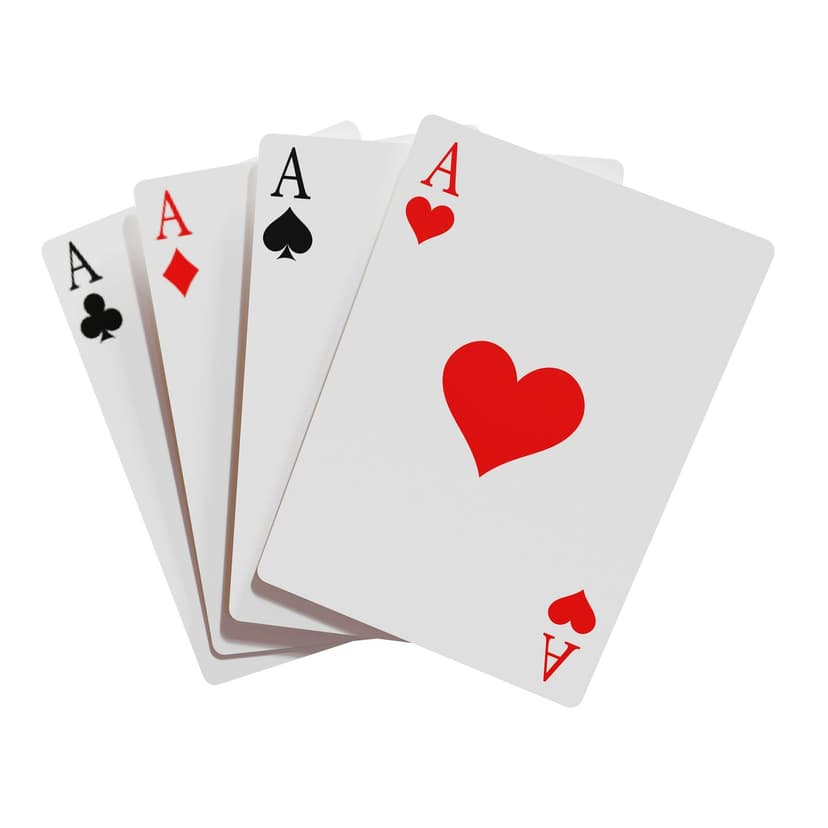
When the dealer's face-up card is an Ace, most blackjack tables offer insurance — a side bet, worth up to half your original wager, that pays out at 2:1 if the dealer's hole card completes a blackjack. It's offered before you take any further action on your own hand, framed as a way to "protect" your bet against the dealer having a natural. Despite the protective framing, insurance is a completely separate wager from your main hand, settled entirely on its own terms based only on whether the dealer's hidden card is a 10-value card.
The math behind why insurance usually loses
Insurance pays 2:1, meaning a correct bet returns twice your stake. For insurance to be a break-even bet, the dealer would need to have a 10-value hole card exactly one time in three. In a standard multi-deck shoe, roughly 30.8% of remaining cards are 10-value (10, Jack, Queen, King) — just under a third, but meaningfully under the one-in-three threshold the 2:1 payout would need to break even. That small gap is the house's edge on the insurance bet itself, and it applies regardless of how strong your own hand is. A player holding a natural blackjack, a hard 20, or a hard 12 all face exactly the same unfavorable insurance math, because insurance is priced against the dealer's hole card alone, not against your hand's value.
Why it feels intuitive anyway
Insurance is framed and worded specifically to sound protective — you're "insuring" against a bad outcome, which taps into a very natural, reasonable-sounding impulse to reduce risk. The problem is that the odds offered don't match the true probability closely enough to make it a genuinely protective bet in the mathematical sense; it's a separate wager with its own house edge, dressed up in defensive language. Framing aside, the underlying math is identical to any other bet with a built-in house edge, and it's worth evaluating it on those terms rather than on how it's presented at the table.
Even money: insurance's twin for a player holding a natural
If you're dealt a natural blackjack yourself and the dealer shows an Ace, you'll typically be offered "even money" instead of standard insurance — a choice to lock in a guaranteed 1:1 payout on your natural immediately, rather than risking it resolving as a push if the dealer's hole card also completes a blackjack. Even money is mathematically identical to taking insurance on your own natural: you're accepting a smaller guaranteed payout in exchange for avoiding the specific risk that the hand pushes instead of paying the full 3:2 blackjack rate. Since insurance itself isn't a favorable bet for the average player, even money isn't either, and most basic-strategy players decline it for the same underlying reason. Full detail on how naturals and pushes interact is in what is a natural blackjack? and blackjack push explained.
When insurance can theoretically make sense
The math changes for card counters specifically, in physical, minimally-shuffled shoe games, when the remaining deck is demonstrably rich enough in 10-value cards to push the true probability of a dealer blackjack above the one-in-three break-even threshold. This is a narrow, count-dependent edge that doesn't apply to the average player, and critically, it doesn't apply in practice to most online blackjack formats — continuously shuffled software-dealt games and many live-dealer tables don't offer the stable, trackable shoe conditions card counting requires in the first place. For the overwhelming majority of players on the overwhelming majority of online tables, insurance remains a losing bet regardless of the specific hand in front of you.
Insurance doesn't reflect your hand's strength
A common misconception is that insurance is more worth taking with a stronger hand, since you have "more to protect." This isn't how the bet actually works — insurance is priced and settled purely against the dealer's hole card, completely independently of your own hand's value. A hard 20 and a hard 12 face identical insurance odds, because the insurance bet doesn't reference your hand at all in determining its payout. If insurance isn't a good bet in isolation, it doesn't become a good bet because your own hand happens to be strong that round.
What happens if you decline insurance
Declining insurance costs you nothing beyond the option itself — your main hand proceeds exactly as it would have otherwise, and if the dealer does turn out to have a blackjack, your main hand simply loses (or pushes, if you also have a natural) as normal, without the insurance side bet having been in play at all. There's no penalty or reduced payout on your main hand tied to having declined insurance.
A simple default rule
For the overwhelming majority of players on the overwhelming majority of online tables, the standard basic-strategy recommendation is straightforward: decline insurance every time it's offered, and decline even money under the same reasoning when holding a natural against a dealer Ace. This isn't a rule of thumb with frequent exceptions — it's the mathematically correct default for players not actively counting cards in a favorable, trackable physical shoe, which describes essentially every online blackjack session.
Frequently asked questions
Does taking insurance ever protect my main hand from losing? No — insurance is a completely separate bet, settled independently of your main hand. Your main hand's outcome is unaffected by whether you took insurance or not.
Is insurance the same thing as surrender? No — surrender lets you forfeit half your bet to end a weak hand early, while insurance is a side bet on whether the dealer's hole card completes a blackjack. They're unrelated decisions offered at different points and for different reasons. See blackjack surrender explained for the full breakdown of that separate decision.
Why is insurance only offered when the dealer shows an Ace? Because insurance specifically bets on the dealer completing a blackjack, which requires an Ace as one of the two cards — with any other upcard, a dealer blackjack isn't possible, so the bet isn't offered.
If insurance is a bad bet, why do casinos keep offering it? Insurance carries a real house edge for the average player, making it a profitable, standard offering for operators — its persistence isn't evidence it's a good bet for players, any other side bet with a built-in house edge remains standard on the casino floor for the same underlying reason.
Should I take insurance if I have a weak hand I'm likely to lose anyway? No — insurance is priced against the dealer's hole card alone, completely independent of your own hand's strength or weakness, so your hand being weak doesn't change the unfavorable math of the insurance bet itself.